# How to Create a Custom Report and Auto-Schedule It

## :point\_right:Steps to Create your Customized Report

1. You can find the <img src="/files/eU41AMi9L3ycF8zKFscT" alt="" data-size="line">button in two pages: '**Library'** & '**My Reports**' page. Go to either of the pages using our navigation panel on the top, and click on <img src="/files/eU41AMi9L3ycF8zKFscT" alt="" data-size="line">
2. **Name** your report. Add **Report Description** if required, and click on '**Continue**'.

![Naming the Report](/files/HiwMrRucarPos7Oasqnf)

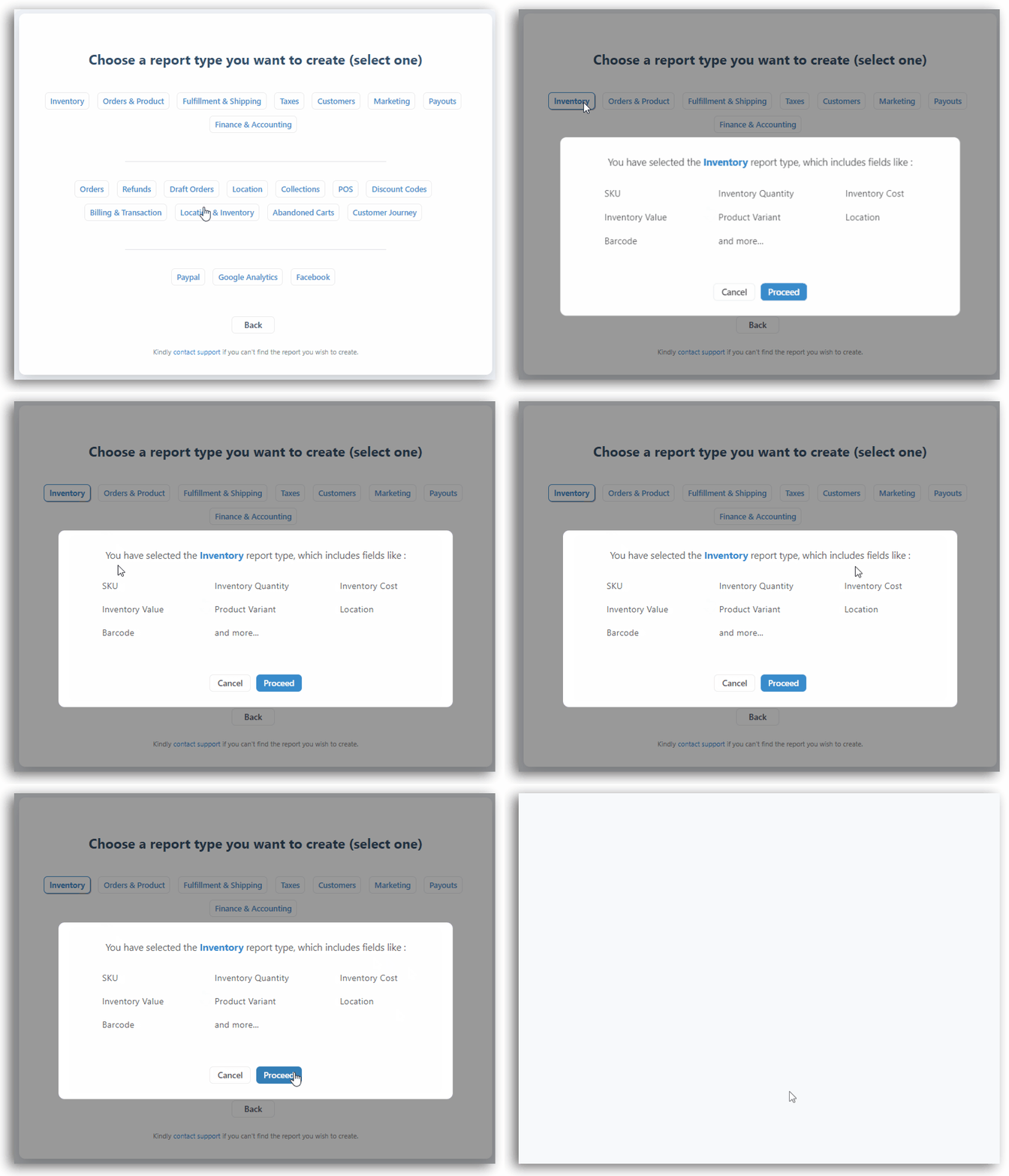
3. Select your **report category** from the **13 options provided**. Once you have selected your category, you will be prompted to **confirm your selection**, and the appropriate **fields** for that category will be **displayed**. Click on "**Proceed**" to continue.

<figure><img src="/files/LkSCYnM81B7dhRGRrVJu" alt=""><figcaption><p>Choosing the Report Category</p></figcaption></figure>

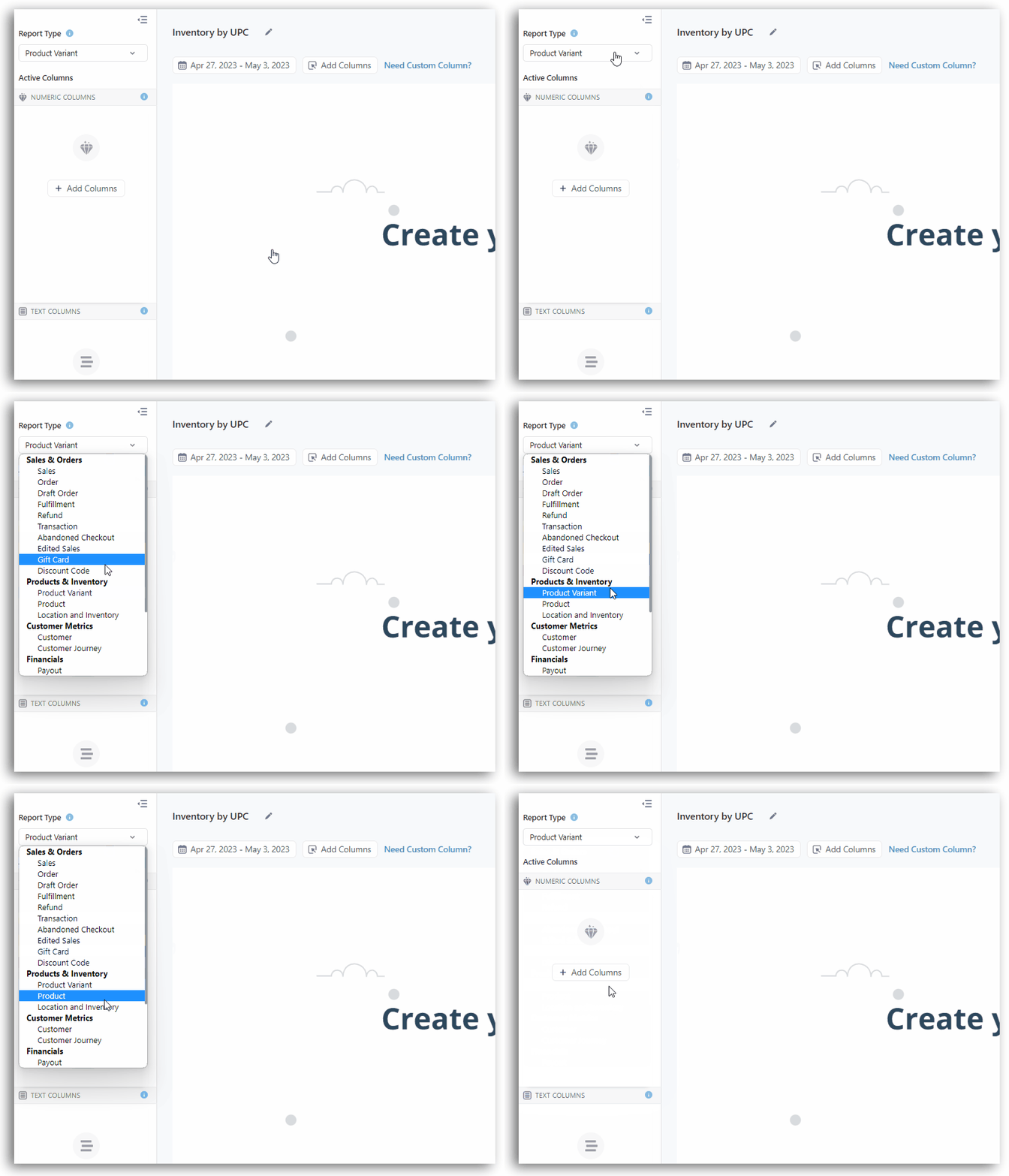
4. The **first report type** from the **report category** will be chosen by **default.** In case you want to see or change the report type, select the **Report Type,** and choose the Report Type, from the sidebar on the left.&#x20;

<div align="center"><figure><img src="/files/uJEWHX32ZPQqvVdg8zv3" alt=""><figcaption><p>Selecting the Report Type</p></figcaption></figure></div>

5. Select your **desired date range** using the **Date Selector** tab. We have several **preset dates ranges** to choose from, **OR** you can select your **own start and end dates** according to your requirement.

&#x20;      *For example: In this case, we have chosen* *the **Last 30 days.***

<figure><img src="/files/00isVdNlpXxdZExuH4ku" alt=""><figcaption><p>Selecting the Date Range</p></figcaption></figure>

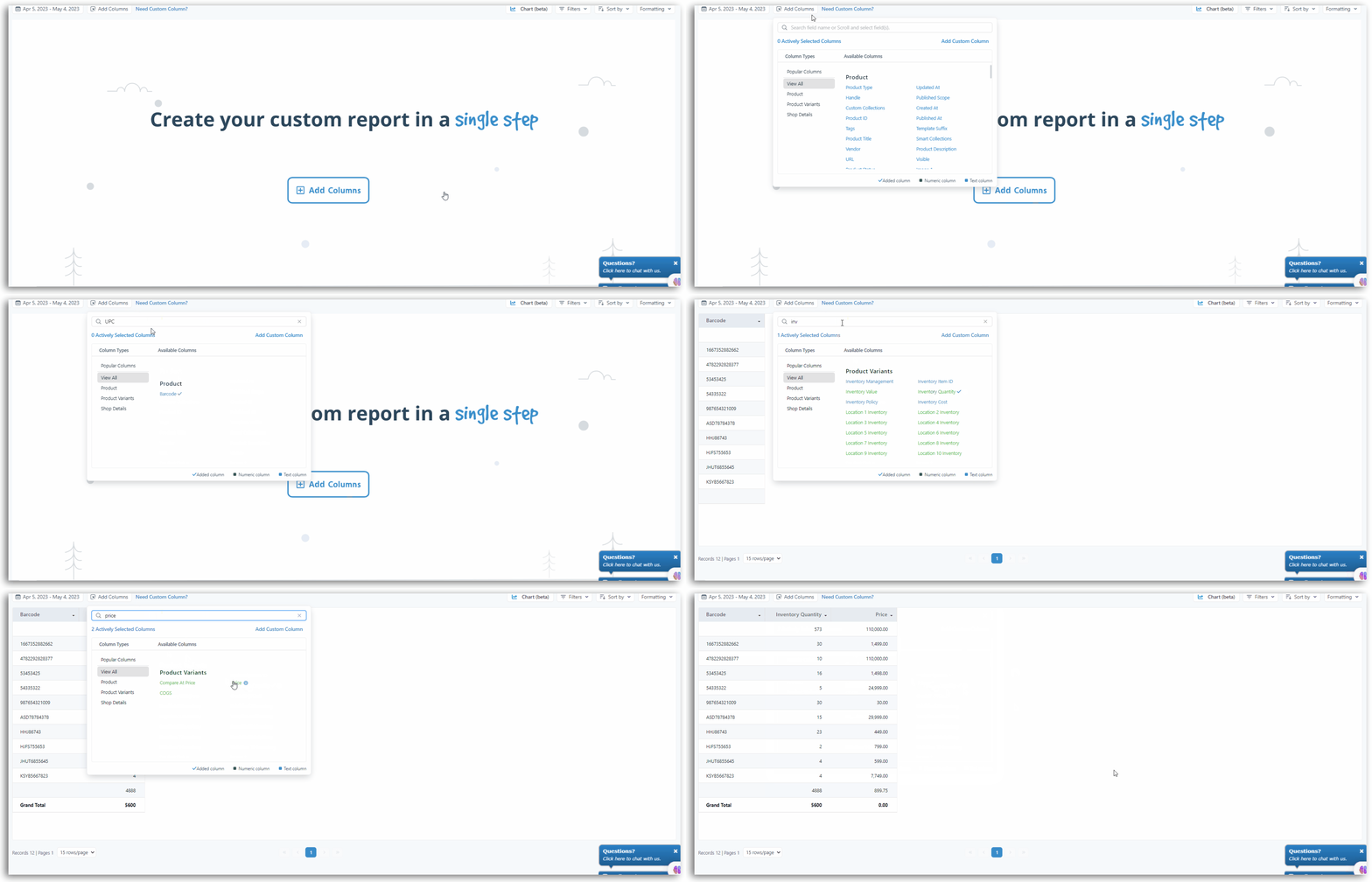
6. To **create your repor**t, select the fields you need by using the "**Select Fields**" tab. Use the **search bar** to locate the required fields for your report, which include (in this case) *Barcode (UPC), Inventory Quantity, and Price*.

<figure><img src="/files/sNRVw9vdrNW5a4e9488Q" alt=""><figcaption><p>Building a custom report</p></figcaption></figure>

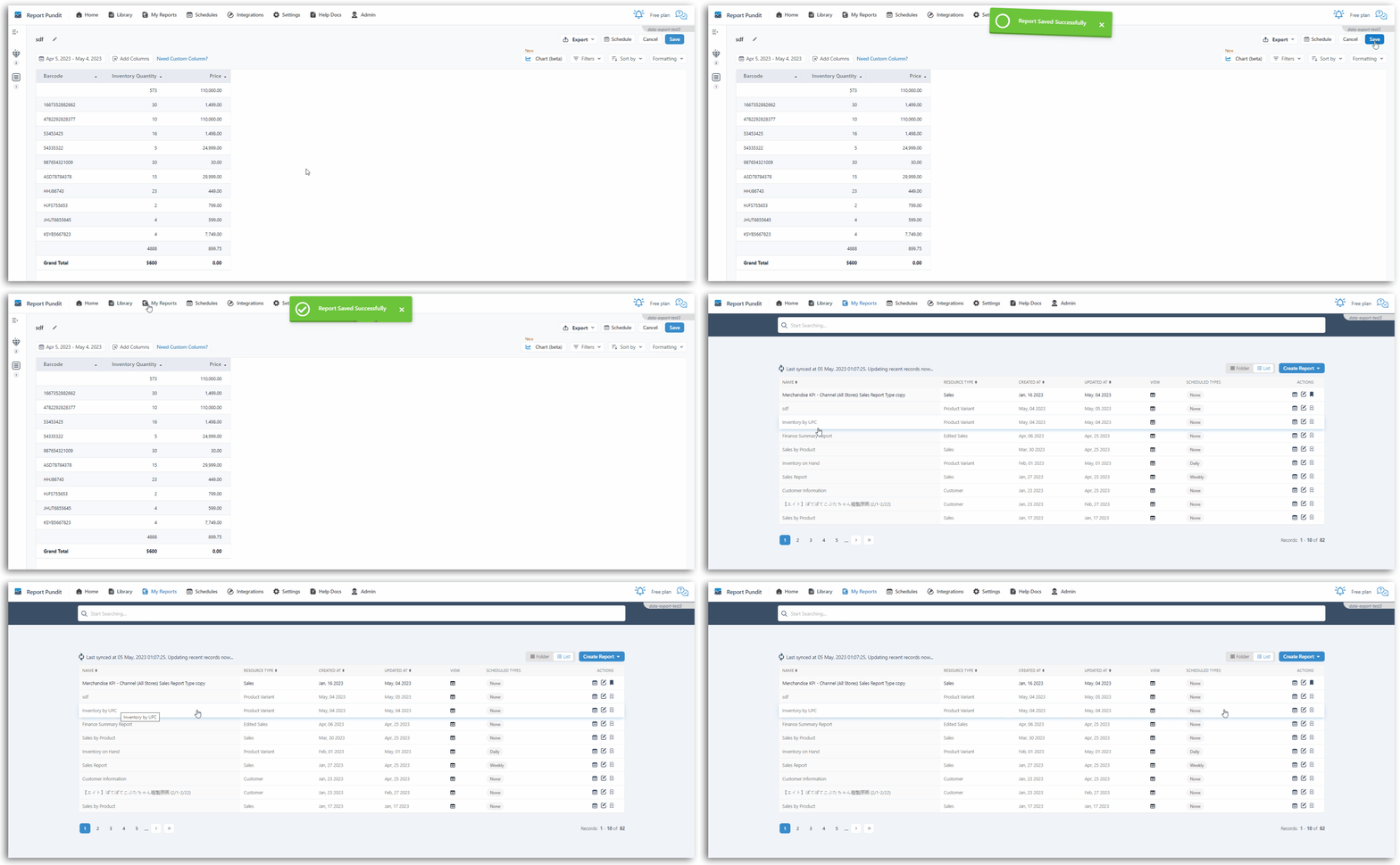
7. To save the report, click on the "**Save**" button. After saving, you can access your report anytime from the "**My Reports**" page.&#x20;

<div align="center"><figure><img src="/files/NyXJsMd7Ad0Y1q4NFpX4" alt=""><figcaption></figcaption></figure></div>

{% hint style="success" %}
&#x20;:star2: That's it. You've successfully customized your report. &#x20;
{% endhint %}

### Now, let's learn how to auto-schedule the reports.

{% content-ref url="/pages/-M\_tGj1GDwaSOjC39uTB" %}
[Email](/knowledge-base/schedules/output-options/email.md)
{% endcontent-ref %}

{% content-ref url="/pages/-M\_yd7837s4-vxAfkZOQ" %}
[FTP](/knowledge-base/schedules/output-options/ftp.md)
{% endcontent-ref %}


---

# Agent Instructions: Querying This Documentation

If you need additional information that is not directly available in this page, you can query the documentation dynamically by asking a question.

Perform an HTTP GET request on the current page URL with the `ask` query parameter:

```
GET https://docs.reportpundit.com/getting-started/create-a-customized-report-and-auto-schedule-it.md?ask=<question>
```

The question should be specific, self-contained, and written in natural language.
The response will contain a direct answer to the question and relevant excerpts and sources from the documentation.

Use this mechanism when the answer is not explicitly present in the current page, you need clarification or additional context, or you want to retrieve related documentation sections.